


Caring for Printed Apparel: How to Keep Your Custom Gear Looking New in 2026

Imagine pulling your favorite VFA squadron t-shirt out of the wash only to find the logo looks like a cracked desert floor. It’s a frustrating moment, especially when that gear represents your team, your school, or your local business. Many of us have watched a vibrant custom hoodie fade into a dull shadow after just one summer in the California sun. Caring for printed apparel shouldn't feel like a guessing game where you hope for the best every time the dryer dings.

You deserve custom gear that looks as professional as the day you first put it on. We agree that your investment should last; that’s why we’re sharing the industry secrets to washing, drying, and storing your items so they never crack, fade, or peel. We'll cover how to use new 2026 innovations like Tide evo tiles and specialized cold-water cycles to preserve that soft-hand feel and keep your colors popping for years to come.
Key Takeaways
Learn why 30°C (86°F) is the magic temperature for preventing ink from breaking down and fading over time.
Discover how sorting your laundry by weight prevents heavy items from grinding against your delicate custom prints.
Master the professional secrets of caring for printed apparel by avoiding high-heat drying cycles that cause logos to crack and peel.
Get specialized advice for maintaining the vibrant look and soft feel of high-use gear like custom hoodies and medical scrubs.
Understand why a high-quality, professional cure during the printing process is the most important factor for long-term durability.
Why Do Custom Prints Crack and Fade? Understanding the Enemy
Ever wonder why your brand-new gear starts looking like a roadmap of cracks after just a few cycles? It’s a common frustration. When you invest in high-quality screen printed t-shirts, you expect them to stay sharp. The problem usually starts with how the ink bonds to the fabric. During the Screen printing process, ink is pushed through a mesh and then cured with heat to fuse it to the fibers. If that bond gets attacked by friction or harsh chemicals, the design begins to fail. Caring for printed apparel means protecting that bond from the moment it leaves the shop.
Your washing machine is essentially a high-speed collision chamber. Mechanical agitation is the technical term for your clothes constantly rubbing against each other. This friction slowly grinds away at the edges of the print. In 2026, many households have switched to highly concentrated detergents like the new Purex formulas or Tide evo tiles. While these are great for stains, their advanced enzymes can actually eat away at the ink if used in excess. Interestingly, that "cracking" you see isn't usually a sign of poor printing. It's often a sign of over-drying. High heat can re-cure the ink, making it brittle until it finally snaps under the tension of the fabric.
The Friction Factor: Why Inside-Out is Rule #1
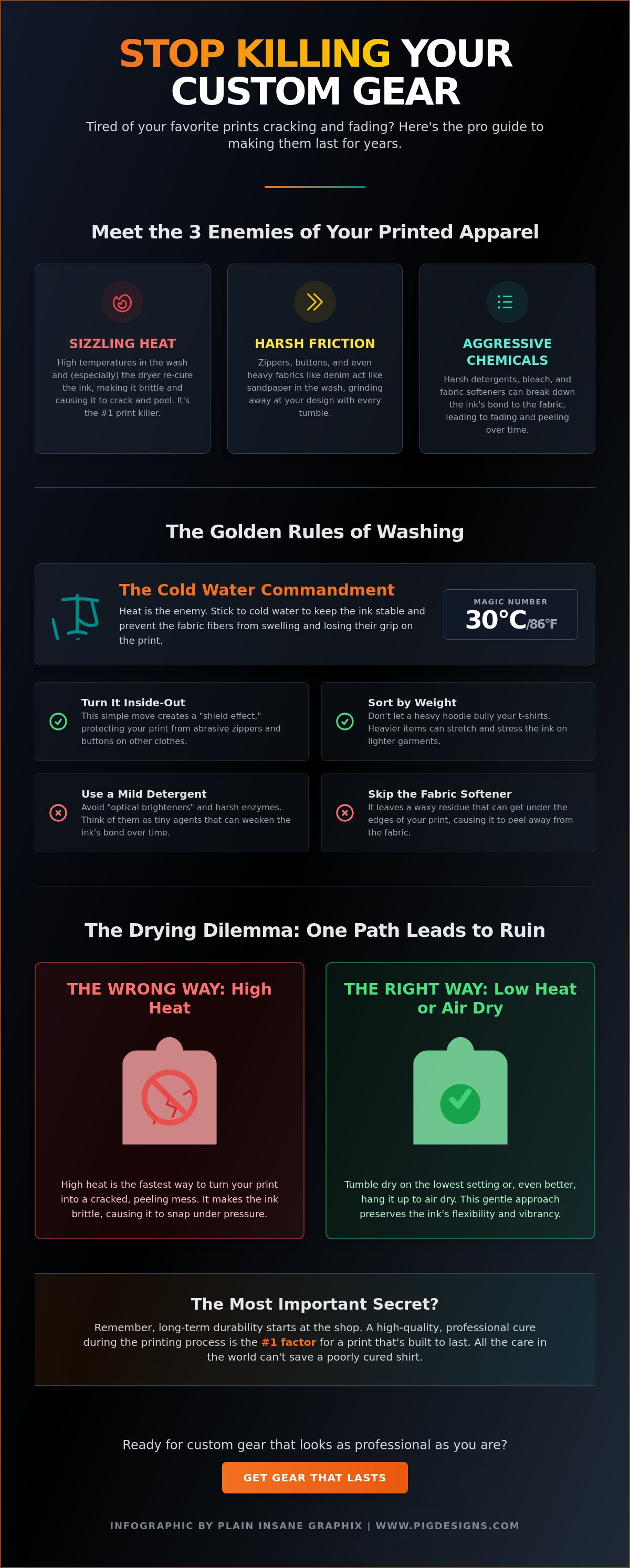
Think about what else is in your laundry basket. If you throw a soft team jersey in with a pair of heavy work jeans, those metal zippers and brass buttons act like 80-grit sandpaper against your design. Every tumble cycle allows those hard surfaces to scrape against the print. By simply turning your garment inside out, you create a "Shield Effect." The fabric of the shirt itself takes the brunt of the friction, keeping the ink safe from external abrasives. It’s the easiest way to prevent the micro-tears that eventually lead to peeling.
Ink Types: Plastisol vs. Water-Based Care
Not all prints are created equal. Most custom gear uses plastisol ink, which is essentially a thin, durable layer of plastic that sits on top of the fibers. You can identify it by its slightly raised, textured "hand feel." Because it’s plastic, it’s very susceptible to heat damage. On the other hand, water-based inks soak directly into the garment. These feel much softer, almost like they’re part of the fabric, but they are more prone to fading if you use harsh bleaching agents. Knowing which one you’re wearing helps you decide whether you’re fighting to prevent cracks or fighting to keep the colors from washing out.
The Golden Rules of Washing Screen-Printed T-Shirts
Washing your custom gear shouldn't feel like a gamble every time you press the start button. It's really about strategy. Caring for printed apparel begins with a simple but overlooked step: sorting by weight. Think about it this way. If you toss a heavy hoodie in with lightweight women’s t-shirts, that hoodie becomes a wrecking ball during the spin cycle. It pulls and stretches the thinner fabric, putting massive stress on the ink. Keep your heavy items separate to ensure your lighter shirts don't get bullied in the drum.
Temperature control is your next line of defense. 30°C (86°F) is the magic number for custom ink. It’s warm enough to actually get the dirt out but cool enough to keep the plastisol or water-based ink stable. You also need to be a detective when choosing your detergent. Avoid anything with "optical brighteners" or aggressive enzymes. These chemicals are designed to stay on the fabric to reflect light, but they can actually weaken the bond between the ink and the cotton. Lastly, skip the fabric softener. It coats the fibers in a waxy film that can get under the edges of your logo, leading to that dreaded peeling effect.
The Cold Water Commandment
Hot water is a major enemy of longevity. It causes the cotton fibers to expand and swell, which forces the ink to lose its grip. By sticking to cold cycles, you’re protecting your gear and saving on energy bills at the same time. For families here in Lemoore, that’s a win-win. If you’re washing a design with tiny, high-detail lines, use the "Gentle Cycle." The reduced spin speed keeps those delicate edges from fraying or lifting during the wash.
Dealing with Central Valley Hard Water
Living in the Central Valley means dealing with water that’s notoriously tough on fabrics. High mineral content can leave your prints feeling stiff or "crunchy" once they dry. This stiffness is a problem because it makes the print more likely to crack when the fabric flexes. Instead of using more soap, try adding half a cup of white vinegar to your rinse cycle. It naturally softens the water without leaving a chemical residue. When caring for printed apparel in our region, less is usually more. Use about half the detergent the bottle recommends; your machine is likely efficient enough to clean perfectly well without the extra suds that dull your design. If you want to see how we build gear to last in these conditions, take a look at our local expert approach.
Drying Without the Damage: Why Heat is Your Print’s Worst Enemy
Did you know the dryer is actually the most dangerous part of the laundry process? Most people think the wash cycle does the damage, but heat is the real silent killer for custom gear. When plastisol ink is heated repeatedly in a dryer, it goes through a process that makes the ink layer tighter and more brittle. Eventually, the fabric stretches while the ink stays stiff; that's when the cracking starts. Caring for printed apparel requires a heat-minimalist mindset to keep those logos looking fresh for the long haul.
You might think the "Tumble Dry Low" setting is a safe bet. It’s often a gamble. Dryer thermostats can vary, and hot spots inside the drum can easily exceed the temperature needed to soften and damage the ink. If you must use a dryer, pull the shirts out while they’re still slightly damp. This prevents that final blast of high heat that causes the most structural damage. For the best results, air drying is the gold standard, but you have to do it right to avoid other issues.
We see a lot of "hanger stretch" here in the Central Valley. If you hang a heavy, wet cotton shirt on a thin plastic hanger, the weight of the water pulls the fibers down. This distorts the design, especially across the chest and shoulders. Laying your items flat on a drying rack is the best way to maintain the garment's original shape. If you’re drying outside, be careful. The Kings County sun is incredibly strong. Those UV rays act like a natural bleaching agent, fading your vibrant colors in just a few afternoon hours.
The "Inside-Out" Drying Secret
If you're line drying in the backyard, keep your shirts inside out. This simple trick uses the fabric as a shield against direct sunlight and prevents the print from absorbing the worst of the UV damage. One common complaint about air drying is that the clothes feel stiff or crunchy afterward. You can fix this easily. Once the shirt is dry, toss it in the dryer on a "No Heat" or "Air Fluff" setting for just five minutes. This breaks the surface tension of the fibers and restores that soft-hand feel without risking any heat damage to the print.
Ironing Around the Design
Never, under any circumstances, touch a hot iron directly to a screen print. It will melt the design instantly and ruin your iron in the process. If you have to get rid of wrinkles, iron the shirt inside out or use a thin pressing cloth over the design. For items like embroidered polos, a handheld steamer is a much safer alternative. Steam relaxes the fabric around the embroidery without flattening the thread or damaging the backing. This keeps your professional look sharp for your next meeting or community event while you're busy caring for printed apparel the right way.
Beyond the Tee: Caring for Hoodies, Scrubs, and Embroidery
Not every piece of custom gear is a standard cotton t-shirt. Different fabrics and decoration methods require a specialized approach to keep them in top shape. Caring for printed apparel becomes a bit more technical when you're dealing with the thick fleece of custom printed hoodies or the high-performance blends found in VFA squadron t-shirts. For our neighbors serving at NAS Lemoore, military-grade fabrics are designed to be tough, but harsh laundry habits can still break down the moisture-wicking properties and dull the squadron logos.
Medical professionals have their own set of challenges. When you're washing medical and nursing scrubs, you need a balance between high-level hygiene and print protection. While you might be tempted to use the "Sanitize" cycle, the extreme heat can destroy the specialized inks used for hospital branding. Instead, use a high-quality disinfectant additive with a warm water setting; this kills bacteria without reaching the "melting point" of the print we discussed in previous sections.
Embroidery Care: Preventing the "Pucker"
Have you ever noticed the fabric around a logo starting to bunch up? This is called puckering. It happens because the polyester thread used in embroidery doesn't shrink, but the cotton shirt underneath it does. To prevent this, never wash your embroidered polos or hats in hot water. If a pucker does start to form, you can "train" the logo to lay flat again by steam-ironing it from the reverse side while it's slightly damp. Also, follow the "Snip, Don’t Pull" rule. If you see a loose thread, use sharp scissors to trim it close to the knot. Pulling it can unravel the entire tension of the design.
Heavy-Duty and Safety Apparel
For those working the fields in Hanford or on construction sites across Kings County, safety apparel is a daily necessity. The silver glass beads in high-vis reflective tape are surprisingly delicate. Washing these items with gritty workwear can scratch the reflective surface, making it less effective at night. If you're dealing with heavy grease or oil, pre-treat the spots with a grease-cutting dish soap rather than using a heavy-duty industrial wash cycle. This protects the back-print and the reflectivity while still getting the grime out. If you want to see how we build gear that stands up to the Central Valley workload, learn more about our local expertise here.
Long-Lasting Prints Start with Quality Production
You can follow every rule in this guide, but if the foundation is weak, the print simply won't last. Caring for printed apparel is much easier when the garment is produced correctly from the very beginning. The most common cause of premature peeling isn't actually your washing machine; it's an improper cure at the print shop. If the ink doesn't reach the exact temperature needed to fuse with the fabric fibers, it remains "under-cured" and will eventually flake off regardless of how gentle you are.
At Plain Insane Graphix, we take this science seriously. We use high-quality plastisol inks and industrial-grade curing dryers that ensure a permanent bond. While "big box" online printers often prioritize volume and speed, we focus on the structural integrity of every logo. We understand that your corporate uniforms or local team jerseys need to withstand the daily grind. That’s why we monitor our heat levels constantly to ensure that every screen printed t-shirt leaves our shop ready for years of wear.
The Value of Local Expertise
Why does local trust matter so much? It’s because we live and work in the same community you do. Our reputation in Lemoore and Hanford is built on community-voted accolades and years of helping local schools and businesses look their best. We don't just pick the cheapest shirts available. We strategically select high-quality third-party apparel manufacturers whose fabrics are known to hold ink better and resist shrinking. This attention to detail is why our customers stay with us for every milestone. If you have a drawer full of gear from other shops that failed too soon, bring a piece by our Lemoore location. We’re happy to give you a professional assessment of why it didn't hold up and show you how our process is different.
Next Steps for Your Collection
Ready to put these secrets into practice? Remember the golden mantra for caring for printed apparel: Inside-Out, Cold Wash, Air Dry. These three simple steps will protect your investment and keep your colors vibrant well into 2026 and beyond. If you're tired of designs that crack after three washes, it's time to experience the difference that professional curing and local expertise make. We're here to help you create gear that your team will be proud to wear for years, not just one season. Start your next high-quality project with us today!
Keep Your Custom Gear Looking Sharp for Years
Your custom gear is more than just fabric; it's a representation of your team, your business, or your squadron. By mastering the basics of cold water washing and avoiding the high heat of the dryer, you've already won half the battle. Caring for printed apparel doesn't have to be a chore when you start with a high-quality foundation. Remember that a professional-grade cure at the shop is what keeps those logos from flaking off during the first few months of wear.
We've spent over 20 years perfecting our craft right here in Lemoore. It's why we were voted Best in Kings County by our neighbors and local partners. Whether you're looking for durable team jerseys or crisp embroidered polos, we ensure every item is built to last. Ready to start a project that stands the test of time? Get a Quote for Durable Custom Apparel and see why local expertise makes all the difference. We can't wait to help you look your best!
Frequently Asked Questions
Can I use bleach on a screen-printed shirt if the shirt is white?
No, you should avoid using bleach on any garment with a custom design. Bleach is an incredibly aggressive chemical that breaks down the plasticizers in screen printing ink, causing the design to turn yellow, become brittle, or flake off entirely. If you need to brighten a white shirt, use an oxygen-based whitener instead. These products are much gentler on the ink while still keeping your cotton looking crisp.
Why is my printed design peeling off after only one wash?
Peeling after just one cycle is almost always a sign of an under-cured print. If the ink didn't reach its full fusion temperature during the production process, it never truly bonded with the fabric fibers. When caring for printed apparel, you can often spot this early by giving the design a very light stretch. If the ink cracks or doesn't snap back immediately, it likely wasn't cured properly at the shop.
Is it better to hand wash custom apparel?
Hand washing is the absolute safest method, though it isn't always the most convenient. It’s the best choice for high-detail items or vintage gear you want to preserve for as long as possible. By washing in a sink with cold water and a drop of mild soap, you eliminate the mechanical agitation of a machine drum. This prevents the friction that eventually wears down the edges of your favorite logos.
How do I get a stain out of a printed area without ruining the ink?
Never scrub a stain that is sitting directly on the printed design. Instead, use a soft cloth and a small amount of mild dish soap to gently dab the area. Scrubbing can mar the surface of the ink and cause the fine details of the logo to lift away from the fabric. For stubborn spots, let the soapy water sit for ten minutes before rinsing the area thoroughly with cold water.
Does fabric softener really ruin screen printing?
Yes, fabric softener is a major enemy of custom gear because it leaves a waxy film on the fabric fibers. This coating makes the surface of the shirt "slippery," which eventually weakens the bond between the ink and the cotton. Over time, this buildup leads to the print peeling away in large sections. Stick to a splash of white vinegar in the rinse cycle if you want soft clothes without damaging the design.
What should I do if I accidentally put my custom hoodie in the dryer on high heat?
If your hoodie goes through a high-heat cycle, do not pull or stretch the fabric while it is still hot. High temperatures make the ink soft and malleable; handling it too roughly while it's warm can permanently distort the shape of the logo. Lay the garment flat and let it cool down to room temperature naturally. Once the ink re-hardens, it will be much less likely to crack or peel.
How long should a high-quality screen print typically last?
A professionally cured screen print should easily last through 50 or more laundry cycles. When you are diligent about caring for printed apparel, the design will often outlast the fabric of the shirt itself. If you notice the print failing after only 10 or 15 washes, it usually points to a production issue, such as low-quality ink or an improper heating process during the initial printing.
Can I dry clean my custom embroidered jackets?
Dry cleaning is actually the preferred method for structured embroidered jackets. Unlike screen printing ink, which can be sensitive to dry cleaning solvents, polyester embroidery thread is incredibly durable and holds up well to the process. Dry cleaning prevents the jacket's inner lining from shrinking or warping, which often happens in a standard home washing machine. It’s the best way to keep your professional outerwear looking sharp and pucker-free.


Comments