


What Types of Decals Do Farmers Use and Why? A Guide to Ag-Grade Graphics

Updated: May 26
Imagine walking out to your equipment yard on a triple-digit afternoon in the Central Valley only to find your safety warnings peeling off the tractor. It's frustrating when expensive gear looks neglected just because the stickers couldn't handle the valley heat. You might wonder exactly what types of decals do farmers use and why some materials survive a heavy harvest while others fade into a blurry mess within a month. High-quality graphics aren't just about decoration; they're essential tools for daily operation and crew safety.

We know you're tired of decals that can't stand up to brutal UV exposure or high-pressure
washes during seasonal cleanup. You need equipment identification that stays put and keeps your team safe without the constant headache of replacements. This article breaks down the specific materials designed for the field, from heavy-duty vinyl to reflective safety markers. We'll explore the latest 2026 AEM safety manual updates and ANSI/ASAE S279.18 standards that keep your machinery road-legal. You'll learn how the right vehicle decals can turn a delivery truck into a professional brand ambassador while ensuring every piece of gear on your ranch remains compliant and visible.
Key Takeaways
Learn why standard stickers peel in the South Valley heat and which high-tack materials actually survive heavy vibrations and dust.
Understand what types of decals do farmers use and why specific reflective materials are mandatory for moving equipment on dark county roads.
Discover how to use custom inventory decals to simplify fleet management and keep your crew OSHA-compliant with clear safety instructions.
Get a step-by-step checklist for analyzing your equipment surfaces and UV exposure to ensure your graphics don't fade or crack.
See why working with a local Lemoore expert provides a durability advantage that online bulk shops simply can't match in our climate.
Why Farming Equipment Needs Specialized Decals (Not Just Stickers)
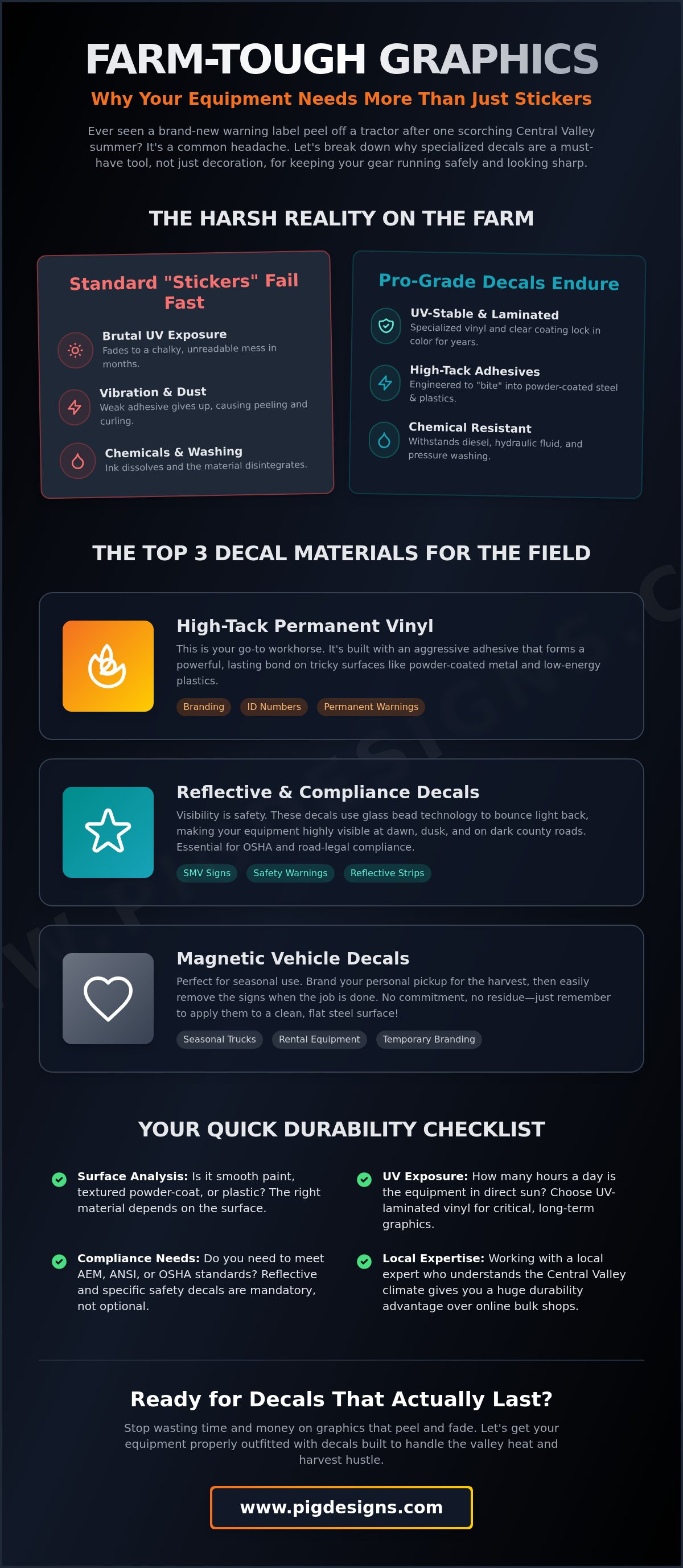
Have you ever seen a cheap bumper sticker curl up and turn white after just one summer in a Kings County orchard? Farmers deal with some of the harshest conditions on the planet. When asking what is a decal? in an agricultural context, it's vital to realize we aren't talking about thin paper labels. Agricultural decals are precision-engineered tools designed to bond with rough, powder-coated steel and withstand the constant rattling of a harvester. Understanding what types of decals do farmers use and why is the first step in protecting your gear and your crew.
These graphics act as the "memory" of your machine. They hold vital safety warnings, load limits, and maintenance schedules that keep your operation compliant with the latest 2026 AEM Agricultural Tractor Safety Manual updates. Without durable materials, a simple diesel spill or a high-pressure wash during seasonal cleanup could strip away your most important operating data. Think of them as a permanent logbook that lives right on the chassis of your equipment.
The Central Valley Sun Factor
Lemoore summers are brutal. On a 100-degree day, the surface temperature of a tractor hood can bake standard adhesive until it turns into a brittle, flaky mess. High-quality vehicle decals for the farm utilize UV-stable vinyl as the industry standard. This material uses specialized pigments and stabilizers that prevent your branding and safety icons from fading under the intense California sun. It ensures that your John Deere green or Case IH red stays vibrant instead of turning into a dull, chalky grey within a few months.
Chemical and Abrasion Resistance
Your equipment faces constant contact with pesticides, herbicides, and hydraulic fluids. Standard stickers simply dissolve when exposed to these chemicals because their ink isn't shielded. Professional ag-grade graphics include a specialized over-laminate layer. This thick, clear coating protects the print from flying debris, grit, and chemical erosion. High-tack adhesives are also essential. They are formulated to "bite" into the textured or powder-coated surfaces common on heavy machinery, creating a bond that won't fail even during high-vibration harvesting tasks. When you invest in these specialized materials, you're ensuring your safety labels remain legible and your brand stays visible through the toughest seasons.
The 3 Most Common Decal Materials Found on the Farm
Choosing the right material is the difference between a graphic that lasts a decade and one that washes off during the first rain. When you look at what types of decals do farmers use and why, you'll see three heavy hitters dominate the field. Each one serves a specific purpose, from permanent branding on a multi-million dollar harvester to temporary ID for a seasonal harvest truck.
High-Tack Permanent Vinyl
Modern tractors and implements often use low-energy plastics or powder-coated metals. These surfaces are notoriously "slick," making it hard for standard stickers to grab hold. High-tack vinyl is the workhorse for these situations. It's engineered with an aggressive adhesive that bites into the surface, creating a bond that stays put for the life of the machine. You'll see this material used for everything from tractor hood logos to large scale branding on grain bins and silos. It doesn't just sit on the surface; it becomes part of the equipment.
Reflective Safety and Compliance Decals
Visibility is a massive concern during early morning almond shakes or late night tomato harvests. OSHA requires specialized safety decals to warn crews about power take-off hazards and moving parts. Reflective stripping and Slow-Moving Vehicle (SMV) signs are essential for navigating dark county roads safely. Pairing these durable equipment markers with high-visibility safety apparel creates a cohesive safety culture for your entire field crew, ensuring everyone stays seen and protected.
Magnetic Vehicle Decals for Seasonal Use
Not every farm vehicle needs a permanent logo. Many growers in the South Valley use personal pickups or temporary rentals during the peak of the season. Magnetic signs are the go-to flexible choice. They allow you to brand a truck for the harvest and simply pull the sign off when the work is done. Just remember a quick tip: always clean the truck door surface before applying the magnet. Dust trapped underneath can scratch your paint or cause the magnet to lose its grip and fly off while you're cruising down the 198.
When you're ready to order, you'll likely choose between two finishing styles. Die-cut decals are cut through both the vinyl and the backing, giving you a custom-shaped sticker. Kiss-cut decals only cut through the vinyl layer, leaving the square backing intact. Many farmers prefer kiss-cut for field applications because the extra backing makes them much easier to peel when you're wearing work gloves. Our team has spent years perfecting these details for local growers. You can learn more about our local expertise and how we support the Central Valley ag community.
Functional vs. Branding: Why Farmers Invest in Custom Graphics
Why would a busy grower spend time thinking about graphics? When you strip away the technical jargon and look at what types of decals do farmers use and why, it comes down to two things: running a safe operation and building a reputation. In the Central Valley, your equipment is often the first thing people see. Whether you're at the Co-op in Hanford or moving a fleet through Visalia, those graphics tell a story about how you run your business.

Beyond the look, there's a huge practical advantage to custom numbering. If you're managing dozens of trailers or implements, small numbered decals make inventory tracking a breeze. It's much easier to tell a crew member to "grab trailer #42" than to describe which flatbed you mean. Plus, for your resale value, clean and intact graphics suggest the machine was well-maintained. This professional edge can actually help you get a better price on the used market later on.
Safety, Compliance, and Instruction
Safety isn't just a suggestion; it's a legal requirement. You need clear "Danger" and "Caution" decals on PTO shafts and any moving parts where a hand or clothing could get caught. A critical piece of this puzzle is the Slow Moving Vehicle Emblem (SMV), which is mandatory for any machinery traveling on public county roads. These decals save lives by giving distracted drivers plenty of warning during those dusty harvest months.
Instructions are just as vital. Think about decals for tire pressure, fuel types, or lubrication points. These tiny labels prevent expensive operator errors that could sideline a tractor during the peak of harvest. If your factory labels have worn off over the years, a local shop can often recreate those specific warnings to keep you compliant and your machinery running smoothly. It's a small investment that prevents massive repair bills.
See how to install equipment decals: Watch Video
Building a Local Farm Brand
Family farms in our region are increasingly treating their operations like modern brands. Putting your farm name and logo on your trucks turns every trip into a mobile billboard. It builds trust with neighbors and partners who see your name daily. To really lean into that professional look, many local growers pair their vehicle decals with custom hats for their entire crew. It creates a unified appearance that shows you take pride in every aspect of your work, from the field to the front office.
How to Choose the Right Decal for Your Equipment
Have you ever ordered a custom graphic only to realize it covers a radiator vent or a door handle? It's a common mistake that can ruin a professional look and interfere with machine performance. Choosing the right material requires a quick audit of where the decal will live. When you understand what types of decals do farmers use and why, you can select a product that survives a 10-year tractor life instead of something that fails during a 3-month harvest. You have to consider the surface texture, the environment, and the expected lifespan before you hit the order button.
Measurement is your best friend. Before calling a shop, take a tape measure to the actual equipment. Don't rely on the owner's manual specs for surface area; those don't account for the curves of a fuel tank or the placement of rivets. Leave at least a half-inch of "breathing room" around edges and hardware. This prevents the vinyl from lifting at the corners when you're out in the field or using a high-pressure sprayer to knock off harvest dust.
Matching Material to Surface Texture
Surface energy is a technical term for how well things stick. Smooth metal hoods are easy, but textured plastic fenders are a different story. Putting a standard sticker on a textured plastic fender is like trying to tape a brick. It simply won't stay. This is where you need "cast vinyl." Unlike cheaper "calendered" vinyl, cast vinyl is poured as a liquid and retains its shape. It acts like a second skin, conforming to curves and rivets without pulling back. We also use specialized adhesives to combat "outgassing," a process where some plastics release trapped air that causes bubbles under standard stickers.
Considering Seasonal vs. Permanent Needs
Are you branding a roadside stand for the summer or marking a permanent fleet? For temporary needs, a vinyl banner or a coroplast sign is a cost-effective way to get the job done. However, for equipment that sits in the sun 365 days a year, cutting corners on material is a losing game. High-end permanent vinyl is cheaper than replacing poor-quality stickers three times. Investing in premium UV-laminated materials ensures your safety data and brand remain legible for years, protecting both your crew and your equipment's resale value. If you need help deciding which material fits your specific machinery, talk to our local experts today to get a durable solution that lasts.
Custom Decal Solutions for Kings County Agriculture
When you're operating out of Kings County, you face a specific set of environmental challenges that big online printers simply don't understand. We've spent years learning exactly what types of decals do farmers use and why local production is the only way to ensure they survive our South Valley climate. Whether you're running an almond huller in Lemoore or a dairy near Hanford, you need graphics that won't give up when the temperature hits those triple digits. Local expertise means knowing which adhesives can handle the dust and which laminates can block the valley sun.
Working with a local shop provides speed and precision that a warehouse in another state can't match. If a piece of equipment gets damaged during the peak of harvest, you don't have weeks to wait for a replacement safety label. We can often get your vehicle decals or instruction labels ready in just a few days. We also take pride in matching your existing fleet colors and fonts perfectly. This ensures your brand looks consistent across every tractor, trailer, and delivery truck in your yard.
Why Local Production Beats Online Bulk
The "online bulk" deal might look good on a screen, but those stickers often fail the durability test the moment they hit the field. They usually lack the heavy-duty UV protection required for our intense California exposure. As your "Reliable Local Expert," we stand behind every product we print. One of the biggest benefits of staying local is the ability to see a physical proof. You can touch the material and verify the colors before we print 50 fleet decals. There's also a sense of community pride in supporting Lemoore businesses like Plain Insane Graphix, where we treat your farm's professional appearance as a priority.
Getting Your Fleet Field-Ready
Are you ready to upgrade your equipment's look? Starting a custom order is simple and direct. We encourage you to bring in a photo of your machinery or even drive the truck by our shop. This allows us to ensure a custom fit that avoids vents, handles, and rivets. We'll help you navigate the technical choices between high-tack vinyl and magnetic options so you get the best value for your specific needs. Don't let peeling stickers or faded warnings slow you down this season. We are here to help you maintain a safe, professional, and compliant operation.
Contact us today to get your farm equipment branded and field-ready!
Ready to Brand Your Fleet for the Next Season?
Your equipment represents your hard work and your farm's reputation. Throughout this guide, we've explored what types of decals do farmers use and why specific materials like high-tack vinyl and reflective safety markers are non-negotiable for Central Valley growers. You now know how to match materials to your machinery's texture and why local production beats online bulk every time. It's about more than just a sticker; it's about keeping your crew safe and your operation professional.
When you choose local expertise, you're investing in graphics that won't peel when the dust kicks up or the temperature spikes. As a business voted Best of Kings County, we understand the unique demands of our local climate. Our Lemoore production ensures a fast turnaround and utilizes high-UV resistant materials built to withstand the valley heat. We take pride in helping our neighbors maintain a fleet that looks as hardworking as the people operating it. We're here to help you get your tractor, trailer, or delivery truck looking its best before the harvest rush begins.
Let's get your gear field-ready and looking professional today!
Frequently Asked Questions
Can I apply new decals over old, peeling ones?
You should never apply new decals directly over old, peeling ones because the new adhesive will only be as strong as the failing sticker underneath. If the old layer continues to lift, your new graphic will come right off with it. This also creates a lumpy surface that traps dirt and moisture. For a professional finish that lasts, you must strip the surface down to the original metal or paint before applying anything new.
How do I remove old vinyl decals without damaging the tractor paint?
Using a heat gun or even a high-powered hair dryer is the safest way to soften old adhesive for removal. Gently warm the vinyl until it feels pliable, then peel it back slowly at a sharp angle. If there's sticky residue left behind, a citrus-based adhesive remover will clean the surface without hurting your paint. Avoid using metal scrapers; a plastic putty knife or an old credit card is much safer for your equipment.
Will power washing my equipment blast off the custom decals?
High-quality decals will survive a power wash as long as you don't aim the high-pressure stream directly at the edges of the vinyl. Keep the spray nozzle at least 12 inches away from the graphic and use a wide fan spray pattern. If you blast the edge of the decal at a 90-degree angle, the pressure can force the adhesive to lift. Once dirt gets under that edge, the bond is permanently weakened.
Do I need a specific type of decal for plastic fuel tanks?
Yes, plastic fuel tanks require specialized high-tack vinyl to handle a process called outgassing. Some plastics used in agricultural gear slowly release gases that can cause standard stickers to bubble and peel away. When growers ask what types of decals do farmers use and why, this is a prime example of a technical need. Using the wrong material on a plastic tank is a quick way to waste money on graphics that won't stay put.
How long do high-quality vinyl decals typically last in the California sun?
You can expect premium UV-laminated decals to last between five and seven years in our intense Central Valley sun. The laminate layer acts like a high-SPF sunscreen for the ink, preventing the colors from fading. In a climate like Lemoore, standard stickers without this protection might look washed out in less than a year. While the sun is brutal, choosing the right "ag-grade" materials ensures your branding stays sharp for multiple seasons.
Can you recreate factory decals for vintage tractors that are no longer available?
We can recreate obsolete factory graphics if you can provide a clear photo and the basic dimensions of the original. This is a great solution for restoration projects where the manufacturer has stopped stocking replacement parts. Because we use modern, high-performance vinyl, these recreations often end up being more durable and fade-resistant than the original stickers were when the tractor first rolled off the assembly line decades ago.
What is the difference between a magnet and a vinyl decal for my farm truck?
The primary difference is how they attach and how long they are meant to stay on the vehicle. A vinyl decal uses a semi-permanent adhesive that works on metal, glass, or plastic. A magnet only sticks to steel and can be removed in seconds. When looking at what types of decals do farmers use and why, magnets are the top choice for seasonal trucks, while vinyl is the standard for permanent branding on your year-round fleet.
Are there specific OSHA requirements for safety decals on agricultural machinery?
OSHA standard 1928.57 requires specific danger and caution signs on all power-transmission components and hazard points. These decals must follow strict color and format rules to ensure they are easily recognized by your crew. It isn't just about having a sticker; it's about having the right warning in the right place. Keeping these labels clean and legible is a vital part of maintaining a safe and compliant farm operation during harvest.


Comments